Retailers can reduce shrink at self-checkout without removing it from stores by deploying visual AI to eliminate the produce misidentification and PLU errors that quietly erode margins. Visual AI uses computer vision to identify items on the scanner scale automatically, catching both honest mistakes and fraudulent selections in real time. The result can be faster checkout, fewer attendant interventions and stronger loss prevention at scale, without adding friction for shoppers.
Self-checkout shrink is a visibility problem, not just a theft problem
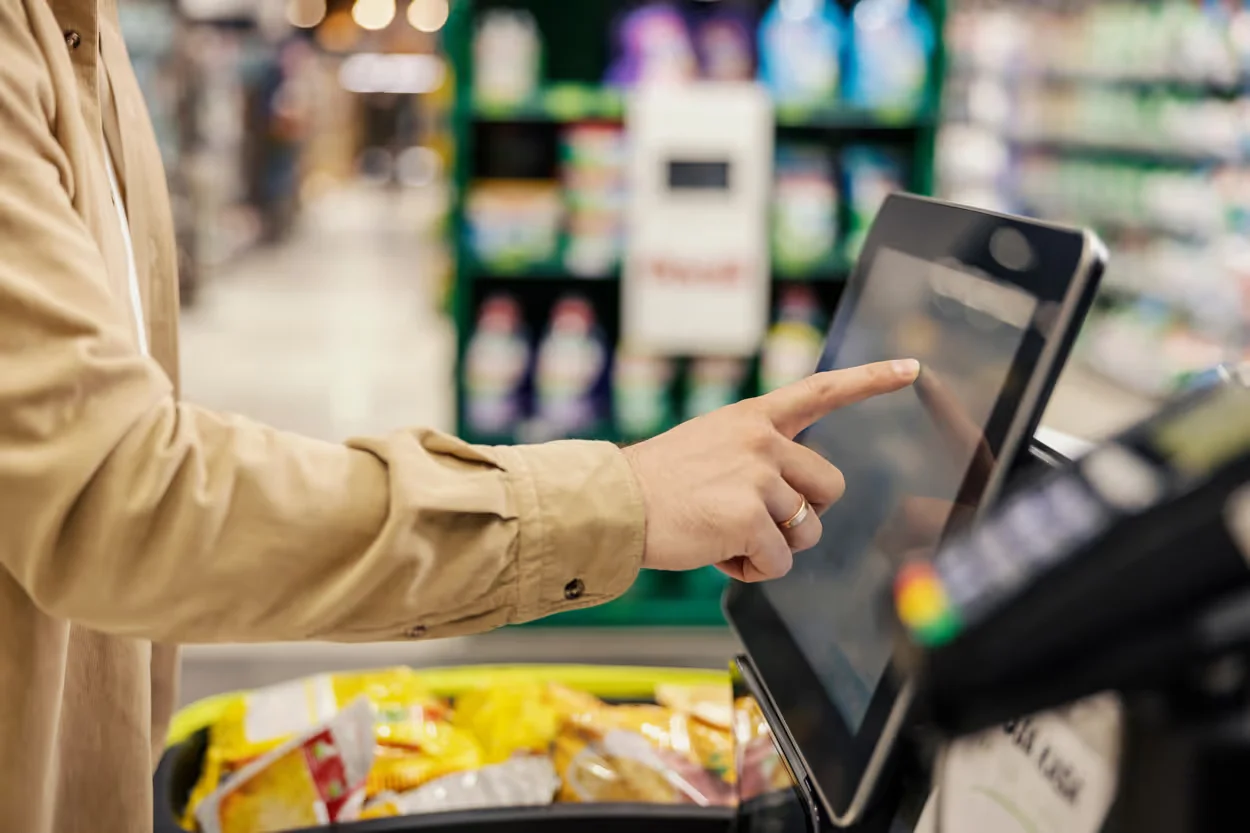
Self-checkout has become a staple of modern grocery retail. Shoppers love it for the convenience, and it helps the business save on labor. Despite its popularity, there's still friction in almost every shopping session. One category is quietly wreaking havoc on your margins: produce.
Every time a shopper hesitates at the PLU screen, types in "banana" three times or accidentally scans a Fuji as a Gala, you may be losing something. It could be time, efficiency or even revenue. And when that friction builds up across thousands of lanes and stores, that annoyance turns into leaky operations that limit the success you'd have.
Visual AI is here to plug that leak and turn self-checkout into a high-performance, margin-protecting asset.
Why loss prevention must account for shopper error
Retailers have spent the past decade embracing self-checkout to boost efficiency and meet shopper demand. But while adoption has grown, operational friction remains—especially when it comes to fresh, unwrapped items like fruits and vegetables. For example, a shopper might not differentiate between organic green onions or regular green onions. They simply might not have checked when they picked them up. While it's inconsequential for shoppers, it can lead to shrink.
Research by the ECR Loss Group and Professor Adrian Beck found that 52% of self-checkout shrinkage is accidental, the result of honest shopper errors, not theft. That finding holds up in the broader context: according to the NRF's 2025 Retail Security Survey, U.S. retailers lost an estimated $121.6 billion in shrink-related losses in 2024, up from $94.5 billion in 2022. As self-checkout scales, so does the cost of every uncorrected misidentification.
The instinct in retail has always been to treat shrink as a security problem. But when you look at what is actually happening at self-checkout, the majority of errors are behavioral, not criminal. A shopper grabs organic green onions and scans them as conventional. They do not notice the difference, and neither does the lane. That is the gap we designed Picklist Assist to close, not by adding friction for honest shoppers, but by making the right choice the easiest choice. - Amit Acharya, Vice President of Retail Product Management, NCR Voyix
While brands focus their loss prevention primarily on shoplifting, they'll still have shrink if they think they only need to account for theft. A large portion of shrink comes from friction at self-checkout lanes. Customers fumble with lookup codes. Then, staff intervenes. And with every confused or overwhelmed shopper, errors sneak in. From there, shrink starts seeping in.
But your shoppers want self-checkout and value the speed and convenience it provides them. In our 2025 Commerce Experience Report — based on a survey of 1,044 U.S. consumers conducted in November 2024 — 83% of shoppers reported having used self-checkout in the past six months. The same report found that 77% prefer self-checkout specifically for speed, making every second of checkout friction a direct threat to the experience shoppers expect.
Put simply, self-checkout is now too important to remain inefficient. At scale, self-checkout shrink is not just about theft. You also must account for misidentification. Fortunately, visual AI can improve both.
What is visual AI at self-checkout?
Visual AI at checkout uses computer vision to identify items automatically, helping reduce misidentification and shrink at scale. It removes the friction shoppers might have when they scan their own items, and it mitigates loss with more accurate item recognition at the point of sale.
How visual AI identifies produce and reduces errors
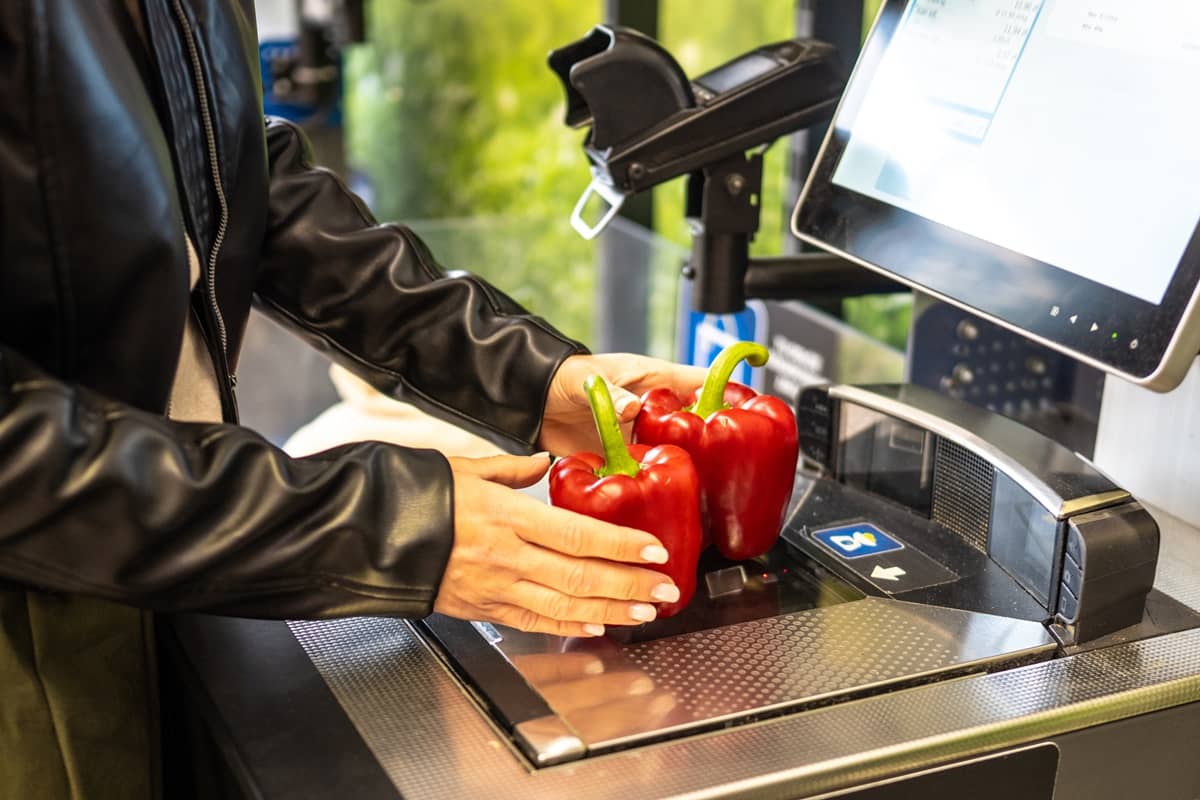
Visual AI flips the script. Rather than placing the burden on customers to identify produce or navigate endless PLU lists, it sees what's on the scanner scale and makes an informed, real-time suggestion.
Advanced systems like Voyix Picklist Assist use built-in computer vision and deep learning models to recognize fresh items. It then presents a short, high-confidence list of options, helping reduce both guesswork and errors.
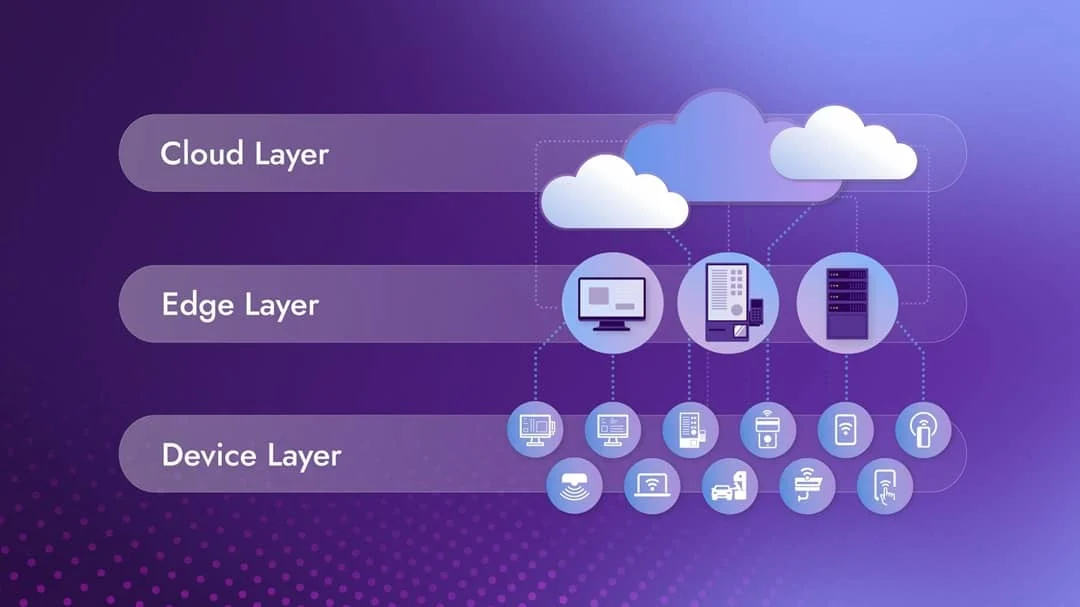
The intelligence behind it lives in the cloud, which means models are trained continuously and improved centrally. This allows for faster onboarding, shared learning across all lanes and locations, and no manual database building.
Because the models are cloud-trained and centrally updated, visual AI can be deployed quickly across locations without manual configuration. It's a networked approach to self-checkout intelligence, so your support team won't be fixing one lane at a time.
Measurable results: speed, accuracy and margin protection
Visual AI improves the checkout experience, removing friction from key metrics that matter to retail decision-makers.
In deployments of Voyix Picklist Assist, checking out a produce item has shown to be up to 44% faster. In one deployment with a leading regional grocery chain, rolled out across hundreds of lanes, produce entry times dropped by approximately two seconds per item, attendant interventions decreased, and self-checkout adoption increased chain-wide. Throughput per lane also improved, especially during peak times.
Picklist Assist is now live across more than 35,000 lanes globally, and the results confirm what we designed it to do. In deployments with our enterprise grocery customers, we're seeing produce entry times drop by around two seconds per item. That's throughput improvement at real scale. When you multiply that across thousands of lanes and millions of transactions, it moves the margin needle in a meaningful way. — Amit Acharya, Vice President of Retail Product Management, NCR Voyix
Perhaps most critically, Picklist Assist helps catch misidentified or fraudulent transactions before they're finalized—providing real-time alerts to attendants when visual input and selection don't match. This turns visual recognition into active loss prevention.
Combined, these improvements don't just reduce friction. They protect margins.
How visual AI fits into your store operations
What makes visual AI transformative isn't just what it does, but how it fits into a broader vision of store modernization. It can elevate the front end from a reactive process to a proactive advantage.
And it does it without requiring a total infrastructure overhaul. Voyix Picklist Assist integrates directly into existing self-checkout solutions and supports hybrid deployment models, whether fully cloud-based or edge-connected. With no "gold" databases to manage and models that learn automatically from live usage, deployment is designed to be fast, scalable and sustainable.
It's not just a product upgrade; it's a step forward in retail intelligence.
Visual AI reduces shrink without slowing checkout
In a time when front-end friction affects the customer experience and bottom line in equal measure, visual AI offers something rare: a technology that simplifies operations, protects revenue and scales without complexity.
Self-checkout isn't going away, but the inefficiencies that come with it can be significantly reduced. If your lanes aren't getting smarter with every scan, they're leaving value on the table.
At scale, small checkout errors become systemic financial leakage. Visual AI helps retailers close that gap, quietly protecting margins while making the checkout experience smoother for everyone.
Frequently asked questions
What causes shrink at self-checkout besides theft?
A large portion of self-checkout shrink comes from shopper error, not theft. Customers fumble with PLU lookup codes, misidentify produce items (such as scanning a Fuji apple as a Gala) and accidentally select the wrong variety—organic vs. conventional. These honest mistakes compound across thousands of transactions and lanes into significant margin erosion.
What is visual AI at self-checkout?
Visual AI uses computer vision and deep learning to automatically identify items on the scanner scale. Instead of requiring shoppers to look up PLU codes manually, the system presents a short, high-confidence list of options, reducing misidentification, speeding up produce transactions and turning the checkout lane into an active loss prevention tool.
Can visual AI work with existing self-checkout hardware?
Yes. Voyix Picklist Assist integrates directly into existing NCR Voyix self-checkout solutions and supports hybrid deployment models, whether fully cloud-based or edge-connected. Cloud-trained models update centrally, so there are no manual databases to build and no lane-by-lane configuration required.
For more ways you can improve your self-checkout experience, be sure to check out our article on the five innovations that are changing the way shoppers use SCO.
Share this post
Related blog articles
Even more expert insights into important retail and restaurant trends.
Restaurant & Retail Tech: Why Cloud‑to‑Edge Architecture Is Becoming the New Standard