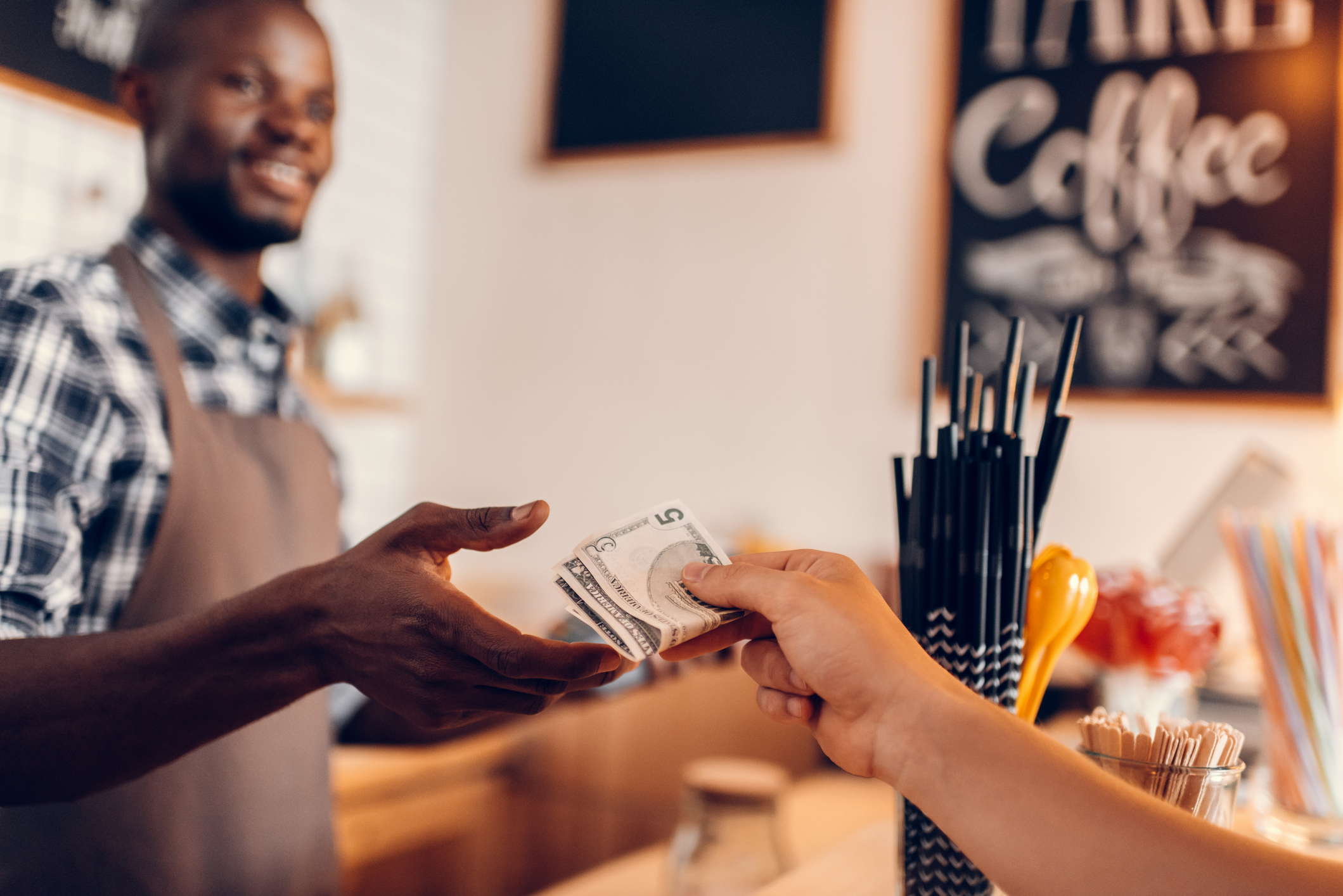
As inflation, credit card fees and operational costs continue to rise, many restaurant owners are exploring new ways to protect their margins. One increasingly popular strategy is cash discounting: offering a lower price to customers who pay with cash instead of credit or debit cards.
But what exactly does that mean, and how does it work in a restaurant setting? Let's break it down.
The basics of cash discounting
Cash discounting is a pricing strategy where restaurants give customers a lower price if they pay with cash instead of a credit or debit card. It’s essentially the reverse of a credit card surcharge; instead of adding a fee for card use, you offer a discount for cash. For example, a menu item might be listed at $10.30 (the card price), but if a customer pays with cash, they receive a 3% discount, bringing the total to $10.00.
This approach helps restaurants offset the credit card processing fees they would otherwise have to pay or factor into pricing.
Cash discounting in practice
To implement cash discounting, restaurants typically:
- Adjust their pricing to include the cost of card processing.
- Offer a discount (usually 3-4%) to customers who pay with cash.
- Clearly communicate the policy with signage, receipts and staff training.
The benefits of cash discounting
- Lower credit card processing fees: Credit card fees can eat into profits, especially for small or independent restaurants. Cash discounting helps offset these costs by encouraging customers to pay with cash, which incurs no processing fees.
- Improved profit margins: By reducing the number of card transactions, restaurants retain more of each sale. This can be especially impactful in high-volume, low-margin environments like quick-service or casual dining.
- Transparency with customers: Unlike surcharging (which adds a fee for card use), cash discounting frames the lower price as a reward for cash payments. This can feel more positive and customer friendly.
- Faster access to funds: Cash payments are immediate, whereas card payments can take 1-3 business days to settle. This can improve cash flow and reduce reliance on credit.
Potential barriers to of cash discounting
- Customer pushback: Some customers may view cash discounting as a penalty for using cards, especially if not clearly communicated. In a digital-first world, many people simply don’t carry cash.
- Operational complexity: Handling more cash increases the risk of theft and counting errors, as well as the need for secure storage. It may also require more frequent bank deposits and staff training.
- Legal and compliance concerns: Cash discounting is legal in most U.S. states, but it must be implemented correctly. That means, among other things, clear signage, itemized receipts and compliance with card network rules. Missteps can lead to fines or chargebacks and violations can result in fines ranging from $1,000 to $25,000 per incident. Card brands often use secret shoppers to audit businesses suspected of non-compliance.
- Potential impact on tips: If customers pay in cash, they may tip less—or not at all—especially in quick-service settings. This could affect staff morale and retention.
Considerations for implementing cash discounting
If you decide to try cash discounting, keep these guidelines in mind:
- Ensure your menus reflect the price for credit card purchases: You must show the price applicable for payment by credit card for each item, not the discounted cash price. You can display both card and cash prices together, but card prices must always be displayed.
- Be transparent: Use clear signage and itemized receipts and explain the policy on menus, receipts and anywhere payments are processed. The signage must include a statement that the cash discount only applies to cash transactions and must include the specific cash discount percentage. Additionally, a separate line item must be included on the guests’ receipts that indicates that a discount has been applied for cash payment as well as the cash discount percentage and the final dollar amount.
- Train your staff: Ensure they can explain the policy confidently and politely. Cash discounts must be applied only to fully cash-paid transactions.
- Use the right restaurant POS system: Some systems are designed to handle cash discounting automatically and compliantly.
- Monitor customer feedback: Be ready to adjust if you see a drop in satisfaction or sales.
Cash discounting can be a smart way to reduce costs and improve margins, but it’s not a one-size-fits-all solution. Consider your customer base, location and operational setup before making the switch. When done right, cash discounting can be a win-win for your customers, your restaurant and your bottom line.
This content is intended for general information purposes only and should not be considered legal, accounting, tax or other professional advice. You are responsible for ensuring your compliance with applicable laws, regulations and card network rules. For guidance tailored to your specific situation, please consult with a qualified attorney or professional advisor. This information applies exclusively to businesses operating in the United States and its territories.
Share this post
Related blog articles
Even more expert insights into important retail and restaurant trends.
How retailers should split workloads between cloud and edge for real-time store operations
How to reduce shrink at self-checkout with visual AI

Restaurant & Retail Tech: Why Cloud‑to‑Edge Architecture Is Becoming the New Standard