Direct answer
The best convenience retail experiences happen when fuel, store, foodservice, loyalty and digital channels operate from the same data. With a platform, retailers can see what's happening across the forecourt, inside the store and in the kitchen in real time. That visibility helps teams move faster, keep products available, deliver more relevant offers and create a smoother experience from pump to purchase.
Key takeaways
- A unified platform establishes a single source of truth for operational and business outcomes, eliminates friction between IT and business teams, and drives top-line growth through expanded cross-sell and upsell opportunities.
- Real-time transaction data can help operators personalize experiences and make faster decisions across channels.
- A phased approach lets retailers modernize high-friction areas first, test changes and scale with less disruption.
- Bringing fuel, in-store, loyalty, payments and foodservice onto a platform can help retailers introduce new capabilities faster while maintaining consistent operations.
A convenience store may look like one business to the customer, but behind the scenes, operators can be managing five or more separate technology stacks for fuel, point-of-sale, loyalty, payments and foodservice. Each system generates its own data, leaving staff to connect information, reconcile reports and keep experiences consistent across the site.
Current macroeconomic shifts, inflation and labor shortages have placed pressure on convenience and fuel retailers to make every stop easier, more personal and more profitable. In 2026, operators are looking for ways to modernize the systems they already rely on so information can move quickly from the forecourt to the store, kitchen and digital channels.
Operational consistency is only part of the opportunity. The greater value comes from giving operators a real-time view of what’s happening across the site so they can protect margins, act on customer intent and create experiences that bring shoppers back. Here is a practical framework for building that kind of fuel-to-store experience across the business.
Why fragmented vendor stacks cost more than you think
Every new system a convenience retailer adds creates another potential seam in the technology stack, which can slow decision-making, add labor and make it harder to protect margin across the network. Employees often must fill the gaps between systems by reconciling reports, correcting inconsistent data or figuring out why a promotion appeared in one place but not another. Across a large network of stores, these small workarounds can add up to significant operational overhead.
Some costs of managing a fragmented technology stack are easier to see, such as the software licensing fees attached to each vendor. The harder costs to spot are the labor spent bridging systems, decisions made using stale data and missed opportunities to turn a fuel stop into a larger purchase.
When pump experiences, loyalty platforms and in-store POS systems operate in silos, this fragmentation fosters isolated "islands of architecture" that penalize the entire operation. The resulting friction cascades across every level of the organization:
- Customer and associate experiences: Customers walk away from friction-filled interactions, while store associates battle frustrating workflows that accelerate cashier churn.
- IT agility: Engineering and IT teams are bogged down managing slow, expensive in-store changes and maintenance.
- Financial growth: Missed conversion opportunities drag down top-line growth, while operational inefficiencies inflate bottom-line costs.
Conversely, when these touchpoints share the same customer and transaction data, retailers can seamlessly turn forecourt intent into store purchases—recognizing a fueling occasion in real time, serving a targeted offer while the customer is still at the pump, and immediately tracking its impact on basket size.
What an API-first, cloud-to-edge architecture can deliver
An API-first, cloud-to-edge architecture can give convenience store systems a common framework for exchanging information. Open APIs and shared microservices unify applications without individual point-to-point integrations, while edge technology is designed to support centralized management and keep critical store functions running locally when connectivity drops.
For convenience retailers, that framework connects several critical parts of the business:
Forecourt and fuel integration with in-store systems
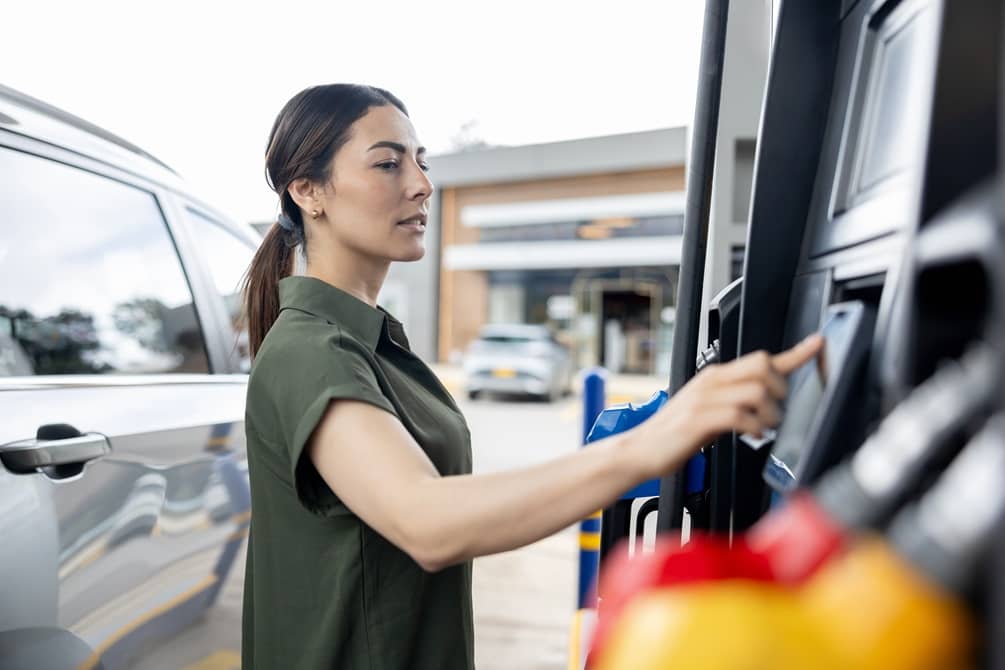
Fuel transactions have historically been separated from in-store activity, creating a gap between the pump and register. A unified platform can integrate outdoor payment terminals and fuel management systems with the in-store point-of-sale, allowing transaction data to flow between the forecourt and store in real time.
NCR Voyix supports more than 18,000 fuel stations in the U.S. and is deploying cloud-based point-of-sale and fuel solutions across that footprint, providing a practical view into how convenience retailers are modernizing the forecourt and store without disrupting daily operations. For operators, connecting the forecourt and store gives a more complete view of activity across the site.
Loyalty and payments as shared commerce platform services
Treating loyalty and payments as shared services gives the pump, point-of-sale, mobile app and other applications access to the same information. Promotions and payments can then resolve across touchpoints without separate reconciliation.
For example, NCR Voyix supports fuel-linked rewards, personalized offers and real-time promotions across mobile, pump and in-store touchpoints. A customer could identify through a loyalty program at the pump and receive an offer for prepared food. Because the pump and register share the same loyalty service, the register can recognize the customer and apply the offer at checkout.
Kitchen and foodservice as part of the transaction loop
Prepared food is no longer a side operation for many convenience retailers. It adds another layer of complexity because orders move from the point-of-sale to the kitchen while purchase information, inventory needs and loyalty engagement feed back into store operations.
Integrating foodservice with payment, loyalty and other core store systems enables real-time inventory visibility and order routing, closing the loop between what a customer orders, what the kitchen prepares and what the ledger records. But as convenience stores expand foodservice, simply adding more point-to-point integrations to legacy POS architectures falls short. Custom integrations often create siloed connections that don't share underlying data, increasing IT complexity rather than solving it. Delivering more seamless experiences requires shifting from ad-hoc integrations to a unified commerce platform built on a single, shared data foundation.
How real-time transaction data changes decision-making
Traditionally, the point-of-sale has told operators what already happened: what a customer bought, what they paid and when the transaction occurred. In a platform, transaction data becomes an operating signal, not just a record of what already happened. Operators can use live sales, loyalty, fuel and inventory information to adjust offers, manage demand and understand site performance while there is still time to influence the customer experience.
With a broader view, operators can calculate fuel and inside-store margins in real time and identify opportunities to grow the basket. They can use loyalty, inventory and transaction data to send a personalized offer to a customer's mobile app or pump screen while they're still on-site.
The same foundation can incorporate newer touchpoints, including EV charging and mobile ordering, into the transaction, loyalty and operational data flowing across the site. That matters because the convenience stop is expanding beyond fuel, and operators need the flexibility to support new customer journeys without creating another disconnected experience.
How to build a unified guest experience across your network
Building this kind of experience doesn’t have to require a single, high-risk transformation. A phased approach lets operators address the biggest sources of friction first, prove value in a smaller group of sites and apply those lessons as they scale.
Consider these four steps:
- Map what you have. Audit integrations across fuel, point-of-sale, payments, loyalty, foodservice and back-office systems. Identify manual workarounds and document legacy hardware and vendor contracts so you can plan around replacement cycles, compatibility requirements and contractual limitations.
- Prioritize the highest-friction seams. Focus on connections that address the most manual work, data delays or inconsistent customer experiences. This gives operators a practical starting point based on the greatest operational burden.
- Pilot across a group of sites. Test the architecture across a representative cluster before an enterprise rollout. Use the pilot to test data migration and employee workflows and gather feedback from store teams. Validate that critical customer data, including loyalty program history, carries over correctly.
- Measure, learn and scale. Track metrics tied to the problems identified during the audit, such as reductions in manual work or improvements in promotional consistency. Use the results and store feedback to refine the approach before scaling across the network.
What operators gain from a unified forecourt-to-checkout platform
A unified guest experience may be what customers notice first, but the value of unification reaches further into the business. When fuel, point-of-sale, payments, loyalty and foodservice share timely information, operators can reduce manual work, respond faster to customer behavior and make better decisions across the network.
Eliminating that invisible layer of technical friction is critical to help reduce the margin erosion that can occur across every seam in a fragmented technology stack. It also gives operators a more flexible foundation for responding to customer behavior with hyper-personalized offers that amplify shopper engagement. By unifying customer and transactional data in real-time, convenience retailers can unlock high-value cross-sell and upsell opportunities and build a seamless, revenue-generating journey from the forecourt to checkout.
Ready to unify your systems? Get in touch and find out how NCR Voyix can help you grow beyond the forecourt. Or stop by our booth at the NACS Show for a hands-on demo and see it in action for yourself.
Frequently asked questions
What is the difference between middleware integration and an API-first platform?
Middleware connects separate systems, while an API-first platform gives applications a common way to communicate without requiring individual point-to-point integrations.
How long does a phased rollout of a unified convenience retail platform take?
Timeline varies by network size and complexity. Most operators start with an integration audit and a pilot across a representative cluster of sites before scaling enterprise-wide. A phased approach lets teams test data migration, employee workflows and critical data carryover before committing to a full rollout.
How do I maintain POS uptime during a platform migration?
To maintain POS uptime, migrate in phases and test compatibility, data and workflows at a small group of sites before scaling. Cloud-to-edge architecture can keep critical applications running locally if connectivity drops.
What role does edge computing play in convenience and fuel retail?
Edge computing runs critical applications locally, helping stores continue operating when cloud connectivity drops while supporting centralized management across the network.
Can a unified convenience retail platform support EV charging and mobile ordering?
Yes. A platform can incorporate newer touchpoints such as EV charging and mobile ordering into the same transaction, loyalty and operational data flowing across the site. This gives operators the flexibility to support new customer journeys without creating another disconnected experience.
Share this post
Related blog articles
Even more expert insights into important retail and restaurant trends.
How retailers should split workloads between cloud and edge for real-time store operations

How to reduce shrink at self-checkout with visual AI

Restaurant & Retail Tech: Why Cloud‑to‑Edge Architecture Is Becoming the New Standard