Drowning in restaurant data?
The fix is simpler than it sounds. Put your POS, labor, inventory and menu data on one unified commerce platform. Then every leader, from general managers to the C-suite, works from the same trusted view of performance. That shift, from data-rich to decision-ready, is what separates multi-location brands that scale with confidence from those that stall while debating dashboards.
Key takeaways
- Most multi-location restaurant brands collect more data than they can act on—fragmented systems and manual reconciliation slow decision cycles and widen the gap between executives and GMs.
- The biggest risk to restaurant growth isn't the wrong decision; it's the delayed decision. Every day spent validating numbers is a day competitors move ahead.
- Decision-ready brands centralize visibility across all locations, use consistent metrics and trust the data enough to act without hesitation.
- Connecting POS, labor scheduling, inventory and menu management through one unified platform eliminates data silos and reduces reconciliation time.
- Initial cross-location visibility can be established in weeks; deeper operational alignment develops over months as systems and teams adapt.
Decision-ready restaurant brands can turn operational data into timely, trusted insights that enable faster, more confident decisions at scale. As your brand expands, evolving your multi-location restaurant operations from data-rich to decision-ready will be essential for maintaining clarity, consistency and control across locations.
Why more data isn't translating into better decisions
Data is everywhere. From the kitchen to the conference room, restaurant brands own and manage solutions that help them extract data.
According to the National Restaurant Association's State of the Restaurant Industry 2026 report, 8 in 10 operators say technology gives their business a competitive advantage, and 6 in 10 are planning technology investments to improve the guest experience. The challenge is that more tools do not automatically lead to better decisions.
But data alone is not enough. You have to know what to collect, what matters and when to act on it. And the more you grow, the more dashboards pile up. Sometimes the tools do not even talk to each other, which leaves gaps in how you manage your data.
Before long, finding the right report feels like a job in itself. Few leaders have time for it. Growth makes it worse, because the gap between executives and general managers keeps widening. That mix of hesitation and silos makes expansion hard to pull off.
So why do so many brands have this friction? It comes down to how they use their data and the tools they own. While most growing brands understand the value of data, they either hesitate too long before they use it, or their data doesn't tell the full story. As a result, companies don't optimize when they should.
It's not that restaurant growth has stalled. Decision readiness hasn't caught up.
Consider the weekly P&L review. On paper it is the picture of discipline. In practice, managers often spend most of the meeting reconciling sales, labor and food cost numbers that three different systems report three different ways. By the time everyone agrees on what happened, the window to act on it has already closed. The problem was never a lack of data. It was a process that mistakes activity for progress.
The difference is simple. Growing brands do not just hold data. They know how to use it fast. Plan too long and quicker rivals reach your guests before you do. Decide ahead of them, and running your locations gets easier. Scaling does too.
What data-rich but not decision-ready looks like day to day
If you're data-rich, your day-to-day might look like this:
- You spend time validating numbers instead of acting on them.
- You have several meetings about the data you've already collected.
- You find data stays stuck at the store, region and function level.
- You need manual exports and reconciliations for any data.
- There are large volumes of operational data for you to sift through and analyze.
The common theme: a significant amount of time is taken collecting insights, understanding them and working to act on this information. If you think you're currently working in a data-rich organization, you might feel the team struggles to act quickly because data is fragmented and slow to surface.
The cost of delayed or unclear decisions
With more sites, bigger, more impactful decisions come. With the heightened stakes, decision cycles tend to slow down because organizations debate data instead of direction. As a restaurant leader, you need data presented clearly, concisely and accurately so you can quickly make decisions. Every day you don't is another day your competitors can jump ahead of you.
The stakes are high because restaurant margins are thin. Profit margins typically run between 3% and 5%, which means a slow decision can quickly eat into an already narrow bottom line (National Restaurant Association). At the same time, 96% of operators point to labor costs and 95% point to food costs as significant challenges, so the speed and accuracy of your decisions around staffing and inventory matter more than ever (National Restaurant Association, State of the Restaurant Industry 2026).
Without the clarity (and the speed that comes with it), it might take longer to notice underperforming locations, and the pivot might become more costly or time-consuming. If a few of your sites are high-performing, you might miss the perfect opportunity to replicate their success across all sites. If your team is stuck with fragmented data, small operational snags might pile up as you scale more, and you might not be able to scale as efficiently.
So the biggest risk to your growth is not the wrong choice. It is the delayed one. And the more you scale, the more decision readiness shifts from a nice-to-have to a need.
These issues, if not resolved with the right technology and operations, mean you are always a few moments behind, and you might not be able to provide the best experience for your guests. With the right software, you can move away from being data-rich and you can scale with confidence.
What it means to be decision-ready
Brands that have their data and are ready to implement changes tend to:
- Have centralized visibility across all locations.
- Use consistent metrics and definitions (without relying on anecdotal information).
- Spot trends and outliers quickly.
- Trust the information enough to act without hesitation.
For these companies, decision readiness means they can consistently turn operational data into actionable tactics. As a restaurant leader, you need these insights as a guide to elevate your business to new heights.
How to become decision-ready
The key to successfully scaling your operations is to invest in technology that manages all sites at once. Most technology has back-office data; good technology can centralize management operations and help you manage it with ease. For instance, if you need to update your menu with seasonal drinks, updating it across all sites at once saves time and improves accuracy.
Having this type of technology means that data doesn't stay at the store level. Investing in software that stores data in the cloud means that leadership can view the data and feel empowered to make the most informed decision. Ensure that the software you invest in can work in harmony, all sharing the same data.
Getting a top-level view gives you the ability to become decision-ready. Here's how you can make the most of managing all your sites at once:
1) Focusing on trends
Data tells the story of your business. When looking at data, pay attention to any trends and outliers, from both a broad and granular perspective. Check which sites are successful, what they have in common and, with your centralized store management, apply those changes to all stores.
2) Emphasizing agility
The best brands are agile, constantly moving with customer needs. Having centralized management tools means that you can move quickly. That way, you pivot while trends are still relevant, so they'll be much more impactful.
3) Speaking the same language
Having one view means that general managers and franchisees all understand what direction they need to go without any surprises along the way. By sending one message that goes across all sites, the experience stays the same across all stores, which gives your brand a more cohesive experience for your guests.
How decision-ready restaurant brands operate differently
Understanding the technology that comes with the brand is crucial, but how you manage the technology and sites is also vital to success. When brands work towards getting to this stage, you must shift your perception of success to be more analytics-driven and urgent. Brands see these changes:
- Performance reviews are centered on direction, not reconciliation. Instead of double-checking to make sure insights are correct, your managers can instead focus on how to go forward with trends and changes. Instead of focusing on the past, you're focused solely on the future.
- Leaders spend less time gathering data and more time acting on it. Investing in robust, agile technology means that the data is accurate, fresh and actionable. You can trim the time spent on the bureaucratic aspects of their job and use that time to talk strategy.
- Teams are more aligned. With clearer direction, teams can understand the overarching strategy of the company and become better advocates for your brand vision.
How NCR Voyix helps you become decision-ready
We partner with restaurant brands like yours to take your brand exactly where you want to go. Through the Voyix Commerce Platform and Aloha Next by Voyix, we'll work with you so you have:
- Centralized, mobile-first menu management. By updating all menus across the board, you can avoid pricing errors and maintain continuity across all sites.
- Role-based dashboards. Instead of sifting through reports that aren't relevant to your needs, you have less reconciliation time and focus on your needs.
- Accurate data. Old data is useless data. With real-time data, your brand has relevant information that can help you make informed decisions now.
- Mobile-first management. Operators and managers can make business decisions remotely from their phones, so they aren't forced to be in the back-office.
- Improved guest experiences. When the back-office has faster decision-making and smoother operations, it frees up staff to focus on the dining experience.
"It's really designed for operators to help them do more with less time in the office and more time on the floor. It's about providing meaningful results and really changing their business in the immediate." — Ed Jantz, Vice President of Restaurant Product Management, NCR Voyix
This is backed by real scale. NCR Voyix supports 80% of the top global restaurant chains and powers $1.4 trillion in annual transaction volume, working with some of the busiest and most complex restaurant environments in the world.
Real momentum backs this up. Chipotle, in a relationship that spans more than 25 years, signed a six-year agreement to become the first brand to implement Aloha Next by Voyix, built on the Voyix Commerce Platform. Chipotle chose the platform for its enterprise-grade resilience and modern, microservices-based architecture, designed to help it accelerate innovation, improve throughput and consistency and deliver a dependable guest experience across thousands of locations.
What implementation looks like
While every brand's journey is different, decision readiness often follows a predictable path.
1) Preparing for the transition
Before you become decision-ready, your team must align on three aspects of business strategy.
- Clean core data
- Clear ownership of metrics
- Single idea of what success looks like
2) Understand the timeline
The initial visibility for your brand can be established in weeks; deeper operational alignment can happen over several months as both systems and teams adapt.
3) Connecting the platform
Your POS, labor scheduling, inventory and menu management all share data through one unified commerce platform.
4) Knowing the common friction spots
Of course, with every new transformation, there are some spots to watch out for. Make sure your team is in lockstep to prevent:
- Siloed tools
- Inconsistent definitions
These can result in delayed adoption and keep teams stuck validating data instead of acting on it.
How your systems come together
Agile, decision-ready brands have systems that all work together. The POS sales and menu data feeds into the management platform so that your team and your managers can make informed decisions. The labor and scheduling data shares real-time staffing data, and inventory and cost data ties operational decisions to profitability. And your centralized management will unify all this across locations.
Leveraging one common platform, your data will flow consistently and seamlessly across your organization. That way, you can reduce fragmentation and confusion, and you can give your teams a single, trusted view of performance.
Reaching the next stage of restaurant growth
Your brand already collects plenty of data. The next step is to use it quickly. To grow effectively, focus on clarity, emphasize speed and trust your insights. Taking that next step will define your next level of operational maturity, and brands who make the move have more control of their destinies as they continue to scale.
With the right tools, speed and software, you can feel empowered to lead your team with trusted insights, stay ahead of your competitors, and scale with confidence.
Frequently asked questions
How long does it take for a multi-location restaurant to become decision-ready?
Initial visibility across locations can be established in days once you connect your POS, labor, inventory and menu management to a unified commerce platform. Deeper operational alignment—where teams trust the data enough to act without hesitation—typically develops over several months as both systems and people adapt.
What is the biggest risk of being data-rich but not decision-ready?
The biggest risk isn't making the wrong choice. It's the delayed choice. Slow decision cycles let underperforming locations go unnoticed longer, make pivots more costly and prevent you from replicating high-performing sites across your brand.
What systems need to connect for a restaurant brand to become decision-ready?
Your POS (sales and menu data), labor and scheduling tools, and inventory and cost systems all need to share data through one unified commerce platform. When these systems feed a centralized platform, leadership gets a single trusted view of performance across every location.
To learn more about how the right back-office technology can free up time and accelerate your operations, check out our Tech Talk featuring Vice President of Restaurant Product Ed Jantz.
Source: Quotes in this article are from the NCR Voyix Tech Talk featuring Ed Jantz, Vice President of Restaurant Product Management, NCR Voyix.
About the author
Jessica Bryant is Senior Vice President of Marketing at NCR Voyix, where she leads marketing for a global technology company serving restaurants and retailers. She has spent her career helping restaurant and retail brands turn technology into practical, everyday advantage, from unified commerce platforms to data-driven operations. Jessica works closely with operators and product leaders across the industry to translate frontline challenges into clear, useful guidance for multi-location restaurant teams.
Share this post
Related blog articles
Even more expert insights into important retail and restaurant trends.

How convenience retailers can create seamless fuel-to-store experiences that keep customers coming back
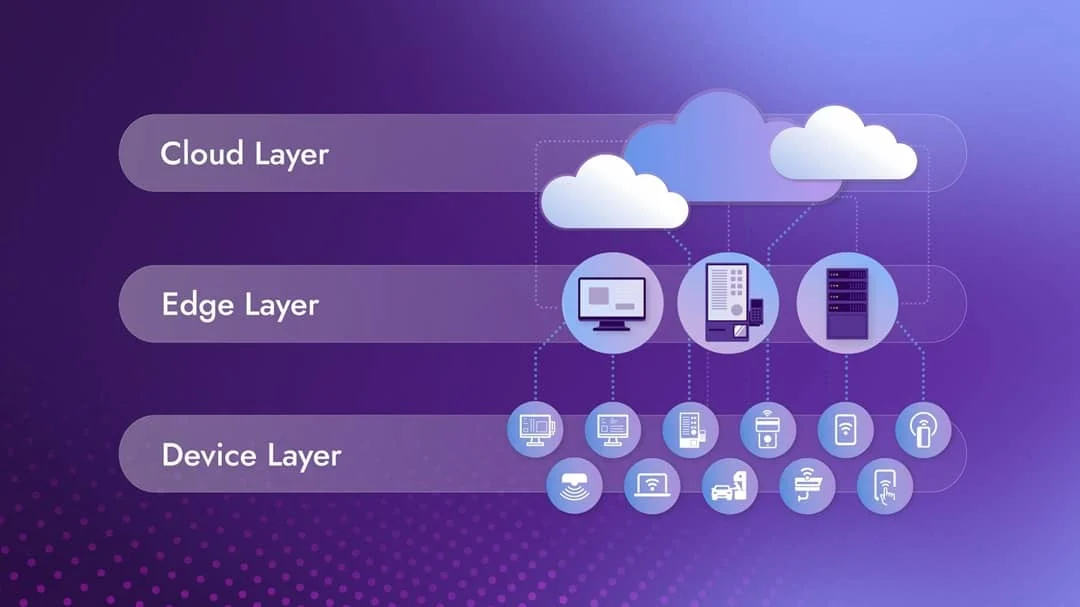
Restaurant & Retail Tech: Why Cloud‑to‑Edge Architecture Is Becoming the New Standard