Is your POS future-proof? Here’s how to tell.
When you make a significant investment in technology, it’s critical to make sure that you’re choosing the right tools for your business’s needs, both now and in the future. Many of today’s retailers struggle with what’s called the legacy trap; they’ve invested in systems in the past that no longer serve their business’s needs, causing a dilemma. Is it more costly to overhaul existing systems and invest in new ones, or to keep operating with outdated technology solutions that are more likely to cause downtime, lost sales, and operational limitations?
For retailers, having robust, modern point of sale technology is essential. If you’re currently struggling with the legacy trap or curious about the way that a new POS platform could help you take your business to the next level, here are some things to consider.
Does your POS enable on-demand innovation?
Traditional, monolithic POS applications make it difficult to implement new services. With a closed system, you may need to hire developers, implement new software, or even buy more tools from your POS vendor—all complicated, expensive, and time-consuming requirements. In contrast, using open APIs to allow you to connect with third-party solutions allows for quicker innovation.
For example, let’s say you want to start selling gift certificates to your business. With a cloud-based platform, you can integrate a 3rd party gift certificate application into your current POS with an open API. As your business expands, you can always access the latest tools and functionalities without having to make significant investment in new tools.
Does your POS offer a unified experience across touchpoints?
Gone are the days of different interfaces across touchpoints. A POS with a common UI across touchpoints benefits your staff in multiple ways. It increases the speed of service while also reducing training costs and allows cashiers to set up profiles with their preferences and accessibility requirements saved under a single login. On the customer-facing side, a modern POS can be quickly updated and personalized across all stores and surfaces.
In a small chain of grocery stores, a common UI across touchpoints could look like a streamlined interface for assisted checkout, self-checkout, and mobile POS, allowing cashiers to transition between POS systems and assist customers without additional training. It could also allow your cashiers to save their accessibility preferences, such as a left-handed interface or one that accounts for visual impairments, so that they are available every time they log in, minimizing the need for ongoing setup. Finally, if you wanted to customize customer-facing screens to show support for a local sports team or charitable cause, the rollout would be simple and consistent across all screens.
Is your POS configurable to your business?
A comprehensive POS solution allows for continuous deployment, shortening the time it takes to make updates and test new features and allows you to optimize your store operations without requiring custom code.
Whereas, in the past, adding a new feature or fixing a bug would take months to roll out, continuous deployment shortens the time it takes to make updates or test new features, delivering new updates every two weeks. If a market trend arises or you want to offer a new feature to stay ahead of your competitors, such as introducing a loyalty program, continuous deployment means that you can do it much more quickly.
You can also use built-in configuration options to customize your POS to your business, as well as to make quick, temporary changes as needed. One application is accessing the user-friendly UI to limit the quantities of certain items per customer during a hurricane, and then revert the limits when the storm has passed. This flexibility allows you to make quick, data-driven decisions without downtime.
Does your POS reduce your IT costs?
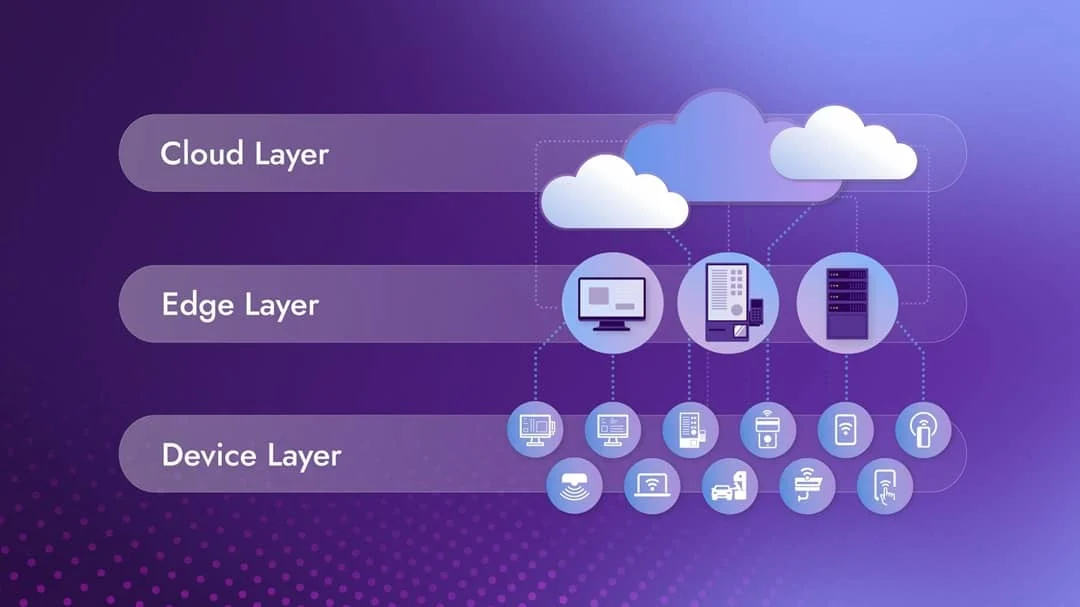
With Edge technology, POS systems can run one unified infrastructure for all checkout lanes across all stores, which can be managed from a single cloud-hosted management control plane.
Practically, that looks like the ability to make updates to any of your POS lanes from anywhere, as long as you have access to your central control plane. These updates will roll out quickly, almost in real time. You can also limit the roll out to single stores or lanes, allowing you to A/B test new implementations. When you harness edge technology, you can enhance operational efficiency, maintain consistency across stores, and test new features without interrupting service.
If you answered “no” to any of the above questions or feel excited by the possible applications of cloud-based POS systems, it may be time to explore a new solution. Although the cost and effort of implementing a new POS may seem daunting, it’s nothing compared to the long-term cost of operating with underperforming solutions; in addition to revenue, your business also stands to lose customers, who will choose to shop at retailers who offer them better experiences. Outdated systems can also negatively affect employee satisfaction and retention and increase labor costs.
But when you embrace the power and capabilities of powerful Edge technology, your POS has the potential to enhance your business, both now and in the future. When you choose a solution that is built around the potential for innovation, you can rest assured that your POS system will stand the test of time.
Share this post
Related blog articles
Even more expert insights into important retail and restaurant trends.
How retailers should split workloads between cloud and edge for real-time store operations
How to reduce shrink at self-checkout with visual AI

Restaurant & Retail Tech: Why Cloud‑to‑Edge Architecture Is Becoming the New Standard