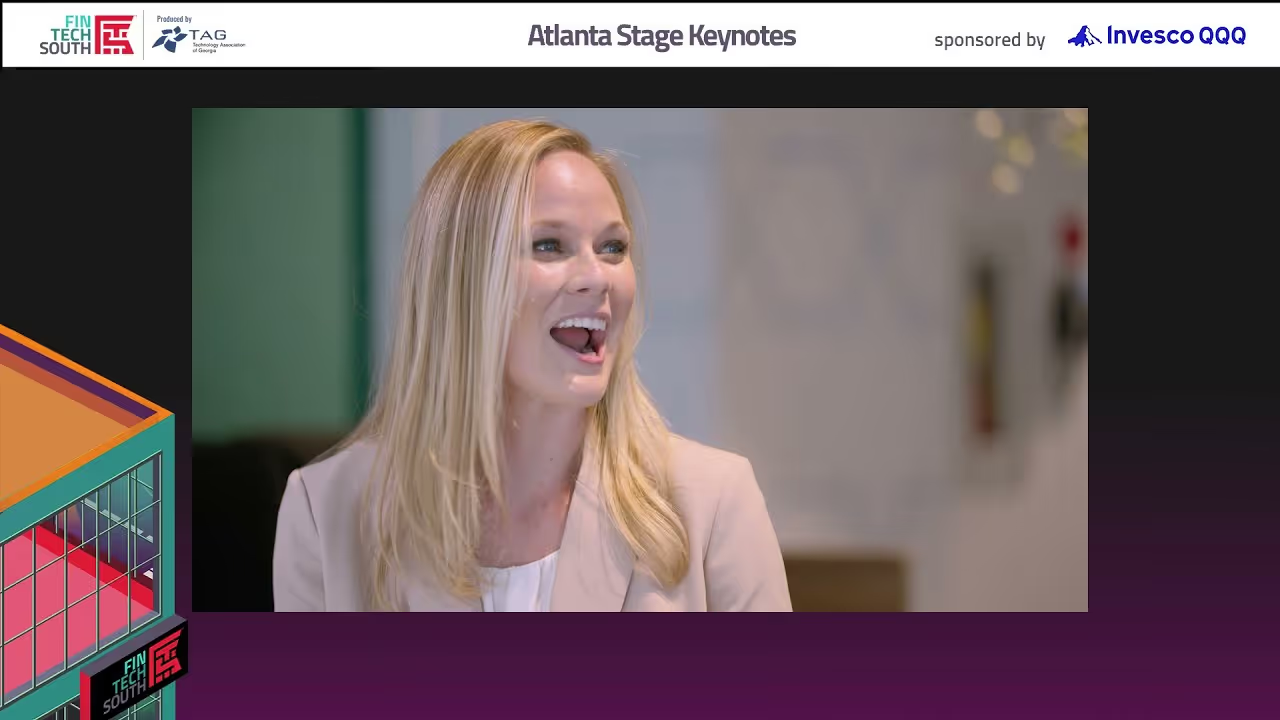
フィンテック・サウス 2021 の動画を見る
この12ヶ月は私たち全員にとって重要な期間でした。小売業界は、パンデミックによって生じた多くの変化と課題の最前線に立たされてきました。一部の実店舗は過去12ヶ月のほとんどを閉鎖していましたが、パンデミックはイノベーションを推進し、すでに台頭しつつあった小売業の新たな姿を大きく加速させました。
パンデミックが消費者の期待の変化をどのように加速させたか
買い物をするのにこれほど良い時代はありませんでした。しかし、店を経営するのにこれほど困難な時代もありません。過去数年間で、消費者は購入の大部分をEコマースに移行させており、COVID-19がこの傾向を加速させました。
パンデミックは、一部の消費者の行動を恒久的に変えた可能性があります。買い物の回数が集約される傾向が見られました。例えば中国では、パンデミック中に食料品の取引件数が30%減少した一方で(JPモルガン 2020)、1件あたりの平均取引額は69%増加しました(JPモルガン 2020)。
米国では、Eコマースの利用可能性と衛生面への配慮から、店舗を切り替える行動が増加しており、消費者の17%が主要な店舗から離れています(マッキンゼー 2021)。多くの顧客が新しいオムニチャネルモデルも試しています。例えば、オンラインで購入し店舗で受け取る(BOPIS)は、パンデミック前の2020年1月の18%と比較して、2020年2月には前年比28%増加し、食料品の宅配は57%増加しています(マッキンゼー 2020)。
さらに重要なことに、これらの新しいエンゲージメントモデルの多くは定着しつつあります。消費者は、パンデミック後もBOPISや食料品の宅配といったモデルを継続して利用する意向が高いと報告しています。この変化した環境で関連性を保つために、小売業者は顧客体験への願望を導く「北極星」を設定し、オムニチャネル戦略にイノベーションを注入するための具体的な目標を持つべきです。
買い物をするのにこれほど良い時代はありませんでした。しかし、店を経営するのにこれほど困難な時代もありません。
イノベーションを活用して小売業者をCOVID-19の危機から脱却させる
危機はイノベーションの起爆剤となります。これは歴史を通じて見られるパターンです。経済的または社会的な大きな混乱が、市場のニーズや行動の変化を生み出し、イノベーターはそれを新製品、サービス、ビジネスモデルの出発点として利用します。1940年代には、家電製品や便利な技術のメーカーが、労働力として社会に進出し、家庭で過ごす時間が減った女性たちのニーズに応えました。
2002年にアジアを襲い、住民が自宅待機を余儀なくされたSARSの流行は、この地域でのEコマースの普及を加速させ、中国をオンライン取引やソーシャルコマースにおけるイノベーションの中心地としました。同様に、COVID-19の危機は、レストラン業界のほぼ一夜にしての再構築を促進しました。QRコードを介してアクセスするデジタルメニューがテーブルオーダーのプロセスを再定義し、飲食店はデリバリー用の大規模な食品準備を可能にする「ダークキッチン」を設置しました。
実際、消費者は今や、ますます多様な方法で商品を見つけ、購入し、受け取ることができます。買い物が面倒な作業だった時代には、今や数クリックで完了します。楽しみだった買い物は、今や発見の旅へと広がっています。
これらすべては、オンラインインターフェース、店舗運営、配送といった多岐にわたる分野での絶え間ないイノベーションにかかっています。しかし、イノベーションはしばしば破壊を意味し、新しいビジネスモデルが生まれます。これらの新しいモデルの多くは、実店舗の存在とその再構築に参入しようとする、純粋なDTC(Direct-to-Consumer)小売業者から生まれています。
ドットコムバブル崩壊後の時代に戦略・イノベーションコンサルタントとしてキャリアをスタートさせた頃、イノベーションは主に発明の拠点であるR&Dセンターから生まれていました。今日、イノベーションは、ソリューションの要素を統合することで解決策を設計する、アジャイルで部門横断的なアプローチと見なされています。極めて不確実な状況下で迅速な意思決定を迫られ、従業員の生活と事業の存続の両方に影響を及ぼす可能性のある困難な選択肢を十分に検討する時間や情報が常に不足しています。しかし、まさにこれらの制約こそが、創造性の波を解き放つことができるのです。
ドットコムバブル崩壊後の時代に戦略・イノベーションコンサルタントとしてキャリアをスタートさせた頃、イノベーションは主に発明の拠点であるR&Dセンターから生まれていました。今日、イノベーションは、ソリューションの要素を統合することで解決策を設計する、アジャイルで部門横断的なアプローチと見なされています。
私だけのためにデザインされた体験としての店舗
「ワンサイズ・フィット・オール」の小売戦略は、実店舗小売業者の規模拡大に貢献してきましたが、もはや通用しません。あらゆる潜在顧客のニーズに応えようとする店舗体験では、個々の顧客が感情的なつながりを感じることは難しいでしょう。
未来の店舗はチャネルレスです。もはや実店舗とEコマースのどちらかという話ではなく、両者が一体となってブランド独自の体験をいかに創り出すかが重要になります。多くの企業は、オンラインと実店舗の小売を別々に扱い、後から統合するというように、小売を異なるチャネルとして捉えがちです。しかし実際には、消費者の視点から見れば、これらのチャネルは顧客体験の道のりにおける単なる異なる接点に過ぎません。
小売はあらゆる場所に存在します。それは、製品やサービスの陳列・販売をはるかに超えた目的を持つ、物理的空間とデジタル空間の複雑なエコシステムです。小売は今や、機能的な消費、社会的交流、楽しみ、エンターテイメント、学習体験など、多くのものが融合したパラダイムとなっています。
これらのトレンドを最大限に活用するため、最も成功している企業は単なる小売業者以上の存在へと進化しました。あらゆる接点での顧客インタラクションを追跡することで、彼らは今やデータ企業となり、膨大な消費者インサイトを活用してショッピング体験をパーソナライズし、向上させています。
スマートなPOSシステムは、個々のショッピング体験をパーソナライズするために必要な顧客データを収集するのに役立ちます。特定のPOSシステムは、CX(顧客体験)およびマーケティングソフトウェアとも連携するため、顧客データに基づいて、メールマーケティングキャンペーンやソーシャルメディア広告など、個々の顧客インタラクションを最適化できます。これにより、すべての顧客がブランドと接する際に、探している種類の製品を目にすることを確実にできます。
「ワンサイズ・フィット・オール」の小売戦略は、実店舗小売業者の規模拡大に貢献してきましたが、もはや通用しません。あらゆる潜在顧客のニーズに応えようとする店舗体験では、個々の顧客が感情的なつながりを感じることは難しいでしょう。
「小売の終焉」なんて言わせない。実店舗こそが、小売イノベーションの新たな実験場です。
ピュアプレイDTCブランドは、「小売業の終焉」という主張が続く中で、最も顕著で明白な例外の一つです。なぜなら、もし私たちが実店舗小売の終焉を目の当たりにしているのなら、近年、ピュアプレイのデジタル小売業者が実店舗に進出していることをどう説明するのでしょうか?既存の総合小売業者(TargetやWhole Foods Marketなど)との提携を通じてであれ、自社ブランドの店舗(Warby ParkerやGlossierなど)を構築することであれ、かつてのピュアプレイブランドは、物理的な店舗スペースを大きく拡大しています。
ほとんどの従来の小売業者は、これらのイノベーションを実現するための体制が整っていません。社内イノベーションインキュベーターの設立を試みて失敗した多くの小売業者も、この種の開発が自社のDNAにはないことを認識しています。柔軟なクロスファンクショナルプロジェクトチーム、迅速なテストアンドラーン、機敏な意思決定階層といった、必要とされる概念や作業方法は、指揮統制型の文化を持つ組織にとっては依然として異質なものです。
独自に任せていては、これらのイノベーションを管理できる既存の小売業者はほとんどいないでしょう。しかし、これらの分野で進歩しない小売業者は、投資を加速させている企業に置き去りにされるリスクがあります。なぜなら、イノベーションへの投資はAmazonのような巨大企業の事業モデルの中核であり、Walmartのような最大手の伝統的な小売業者はその規模を利用して賭けに出ているからです。
小売業者は、必要な能力を得るためにパートナーに頼ることが増えています。総合小売業者は長年、オンライン配送にサードパーティロジスティクスを利用してきましたが、かさばる商品や冷蔵商品の要件があるため、食品では長い間これが実現不可能でした。
そのため、オンライン化に乗り出した最初の波の食料品小売業者は、高コストで独自の流通センター、ダークストア、配送車両の閉鎖的なネットワークを開発しました。現在、パートナーシップは、この高リスク、高投資、そして損益分岐点に達するまでの時間がかかるルートに代わる実行可能な選択肢となっています。例えば、Ocadoは英国のMorrisonsとフランスのCasinoにそのスマートプラットフォームをリースし、カナダのSobey’sや米国のKroger’sとも契約を結んでいます。これは、食料品小売業者が社内能力を開発することへの自信の欠如を驚くほど認めていることになります。
社内イノベーションインキュベーターの設立を試みて失敗した多くの小売業者も、この種の開発が自社のDNAにはないことを認識しています。
パートナーシップにはリスクが伴い、不確実な環境における潜在的な報酬と慎重に比較検討する必要があります。能力のギャップを埋めるために無差別に提携する小売業者は、(たとえパートナーシップをうまく管理できたとしても)自社のビジネスモデルの重要な要素に対するコントロールを手放してしまったことに気づくかもしれません。米国では、多くの食料品小売業者がInstacartと提携してオンライン化を進めています。しかし、そうすることで、顧客との関係の一部を第三者に譲り渡してしまいました。その第三者は、単に現在の事業を拡大し続けること以上の成長計画を持っている可能性があります。
これらのリスクにもかかわらず、ほとんどの既存企業は、増え続ける顧客の期待に応えるために、選択的にパートナーシップを結ぶ必要があるでしょう。幅広いパートナーシップや提携を含む、よりオープンなエコシステムへの移行は、これまでそのような取引に対して閉鎖的であった実店舗小売業界にとって、大きな変化となるでしょう。
Committing to innovation: Three “Essential” actions for a reboot
For me, three “essentials” stand out in order for brick-and-mortar retailers to drive competitive advantage through an increased focus and investment in innovation:
1. Predict and adjust to changing customer patterns, using advanced analytics and flexible technology platforms.
Technology is a strategic imperative for brick-and-mortar retailers if they are to stay relevant and profitable: the retail experience of the future will be propelled by physical technology and advanced analytics to meet changing consumer expectations, whilst allowing retailers to reset the operating model and economics.
Technology can enhance the customer experience and lower retailers’ costs but will also change the set of tasks required to run a store. Rather than simply automating the current operating model, retailers should rethink their entire value propositions for customers and employees alike.
To prepare for this, retailers will need to make data-driven decisions about the order in which they roll out new technologies across regions that vary in their dependence on retail employment. At the same time, this level of change also offers retailers an opportunity to lead the charge on new labor models that enable employees to take more control of their schedule and task orientation, while remaining part of a workforce and community. Their choices around technology will be completely entwined with those around consumer value propositions, operating models, people and, for larger retailers, the impact on and the responsibility for the wider community.
Retailers need to evolve how they evaluate stores and optimize their network by leveraging data sources that provide a detailed view of micro traffic patterns. Retailers should also adjust their analysis for the impact of COVID-19 and determine if store performance is the result of underlying intrinsics or just the physical store location.
2. Blend digital and physical to create imaginative O2O, or online-to-offline, experiences
In the early days of online retail, “brick-and-mortar” became a synonym for “out of date.” In the omnichannel era, physical stores are finding new roles—and are seen as an essential part of the shopping experience.
At Alibaba’s Hema stores in large Chinese cities, customers don’t go to checkout counters; they pay by smartphone. Many don’t take their purchases with them; the store sends a delivery van. And some don’t even want all their food at home; supermarket staff cook it for eating in the store. Early signs are that O2O stores will be more than just interesting experiments and will significantly change retail. Hema is already attracting younger, wealthier, tech-savvy shoppers, a coveted group. They increasingly trust the Hema brand and are willing to buy fresh food online. While China’s lack of strong brick-and-mortar supermarket chains has been a factor in this initial success, the new formats could provide templates for other countries too.
Physical stores that rely on captive trade from customers who live close by, essentially serving the role of stock rooms, will decline as more of their customers find it more convenient to shop online. To survive and thrive, physical stores will need to give customers other reasons to visit and deliver value in different ways. In destination sites, stores will need to be improved and reshaped to deliver a better experience. Staff will need to be retrained to deliver the services that make the store a destination. A significant proportion of other stores will need to be re-purposed to become ‘dark stores’ and BOPIS hubs to help retailers optimize their supply chain networks to get products quicker to customers.
Incumbents will also need to change the way they assess their stores’ contributions. The old measures of total store sales and store contribution margin may no longer give the full picture. One store may be effective as a site where sales associates help customers understand the product range, before a transaction is concluded on the retailer’s website for home delivery the next day.
Another may serve as a pickup and trial point for online apparel orders, where customers can try products on and arrange for alterations to get a perfect fit. Some stores may simply function as places where new customers come to browse, an experience that puts the retailer at the front of their minds when they next shop online. This is where innovative use of AI-enabled cameras to thoroughly map customers’ shopping journeys will enable brick-and-mortar retailers paint a much richer picture of the value their stores add.
3. Transform the delivery of core innovations by dramatically improving the flexibility and efficiency of core processes—which you can measure.
The changing consumer landscape is forcing an evolution in the role of stores from single-use self-service buildings to destination that offer multi-use touchpoints. Innovative technology can both enrich the offer to consumers and reduce costs in the long run, but capturing these benefits means reimagining the operating model. For instance, adding BOPIS service offering may initially increase costs as labor replaces the customer shopping trip, but the upside from an improved value proposition and savings from automation elsewhere could soon outweigh this.
Automation and technology will change both customers’ and employees’ experience in the store, including new immersive experience, information systems for workers, and changes to how items travel from the distribution centers through the store to customers. Elsewhere in the supply chain, big-data and advanced analytics are essential to optimizing processes.
Retailers can forecast demand more precisely (and minimize inventories), leverage physical store stock rooms to populate eCommerce baskets and improve distribution routes, and minimize trips from the store warehouse to replenish shelves. Combining process optimization with automation is especially powerful—demand forecasts can trigger an order from the procurement function for stock that is sent to an automated warehouse, where robots distribute and store the items until they are needed.
Just as automation reduces the need for some tasks, it will increase the prevalence of others. How far a retailer goes in adopting technology both in-store and along its supply chain will depend on its size, sophistication, and capacity to invest. But any change presents a retailer with strategic choices about how its operating model should evolve. Rather than simply automating their current operating model, retailers must determine how to improve their overall value proposition and invest accordingly.
Getting started
The next normal is still taking shape and customer expectations will continue to shift in response. There is much ground to cover and time is of the essence. Brick-and-mortar retailers should start by establishing a North Star to guide their aspirations for customer experience, with clear objectives across each of the three “Essential” actions described above. Retailers that focus on customer experience and respond with agility and innovation in their omnichannel experience will fare better and strengthen their ties to customers.
For many brick-and-mortar retailers, digital disruption and the shift towards omnichannel requires a change from a classical IT function to a modern technology organization. Effective technology enabled innovation requires many small teams who are responsible for designing experiences and supporting business processes (products) end to end. Connecting innovation development teams to the business divisions responsible for the business process in question, including connected KPIs, tears down the walls between business and IT—business and IT have to create an impact together.
この記事をシェアする
関連ブログ記事
小売・飲食業界の重要なトレンドに関する専門的な洞察をさらに詳しくご紹介します。